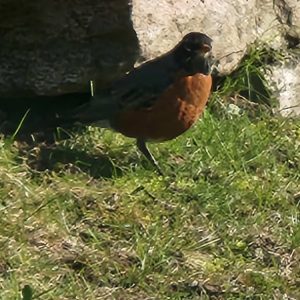
My infamous American Robin photo is where my journey into wildlife conservation truly began. It forced me to think seriously about compassionate conservation. That photo was taken only about a month ago; in reality, that isn’t a long time, but I have learned so much since then.
Multiple university courses later, I am a new man. Do I still have a lot to learn about animals and how to protect them? Absolutely. However, I’d like to use this time to teach you what not to do when you are out in the wild and encounter an animal.
The purpose of this blog isn’t to lecture anyone. I have made mistakes, and I will likely continue to do so as I grow. My hope is that by sharing my errors, I can help you stay safe while ensuring our wildlife remains protected.
Why Closer Isn’t Better: The Hidden Cost of the ‘Perfect’ Phone Photo
A regular person (and literally me not even 2 months ago) would see my American Robin bird photo and think ‘Aww, that’s cute! He’s looking at you!’ but a wildlife conservation expert would ask if this is really the best photo to be taking. The answer would most likely be no.
I took that photo with my phone. If the bird was even 2 inches further away from my camera it will just look like a bunch of Minecraft pixels. That was, and honestly still is, my best looking photo to date which is why it got the most likes on my social medias.
The problem was that by standing so close, I triggered a Vigilance Response. The bird stopped foraging to monitor me, which interrupted its natural feeding cycle. In conservation, our goal is to remain invisible to the ecosystem. By prioritizing a ‘cute’ photo over the bird’s peace, I realized my actions were contrary to ethical wildlife observation. It was an unintentional mistake, but one that changed how I conduct research today.
A professional camera now allows for high-quality photography from a much safer distance, keeping the animals’ peace of mind a priority. Paired with a set of high-quality binoculars for pure observation, the gear kit is now designed for a ‘hands-off’ approach. Every outing also includes a research journal to document findings live in the field.
Beyond the Frame: What We Miss When We Only Hunt for Photos
Photos are an important part of the conservation life but there is a missed opportunity in not being aware of your surroundings. If you focus too hard on the photo you risk missing important details about what the species is doing or the environment around them. These are crucial details that should be documented to help conservation in the long-term.
Another important thing to remember is to take safety precautions before you even step foot outside. Shoe covers, gloves, masks. Zoonotic diseases are real and you the places you step in will transfer bacteria to that habitat.
People who are only worried about getting a photo are probably not worrying about wearing proper gear. Even if unintentional, this could hurt the very species you enjoy observing in the wild.
The Reward of Restraint: Why Letting Wildlife Lead Creates Better Encounters
A few days ago, a crow flew in slow motion right past my head and landed on a low branch beside me. To me, this was a sign that it recognized me; because I visit that area frequently, it has come to trust my presence. I don’t feed it; I simply visit often and observe.
This is a prime example of how letting wildlife ‘do its thing’ allows animals to eventually see you as a safe part of their environment. They don’t have human concepts of ‘friendship’ or ‘respect,’ and as researchers, we must be careful not to anthropomorphize them.
However, being viewed as a neutral part of their habitat rather than a threat is truly the highest reward you can receive in wildlife conservation.
Field Research Disclaimer: Content is for entertainment and editorial purposes only. I am not a medical, legal, or professional advisor. Photography is captured via handheld, minimal equipment for independent research in public or authorized spaces—no identifiable subjects are featured. Do not attempt these observations; consult a professional for safety. Findings are independent observations of Comfy Chaos Collective.
Leave a Reply